Sometimes, greater impact doesn’t come from doing more. Sometimes, it comes from doing less—but doing what matters most.
This was one of the key reflections from FaBCA Collaborate+ 2026, a global event organized by the Christian Alliance for Orphans (CAFO).
While the main Collaborate event took place in the United States, participants in Ghana had the opportunity to connect with the wider global gathering through livestreamed sessions and content from the main event, while also participating in locally facilitated sessions addressing the realities and needs of those serving vulnerable children in Ghana.
This created a unique experience: participants could connect with the global conversation while learning and collaborating within their own local context.
A Local Gathering Connected to a Global Movement
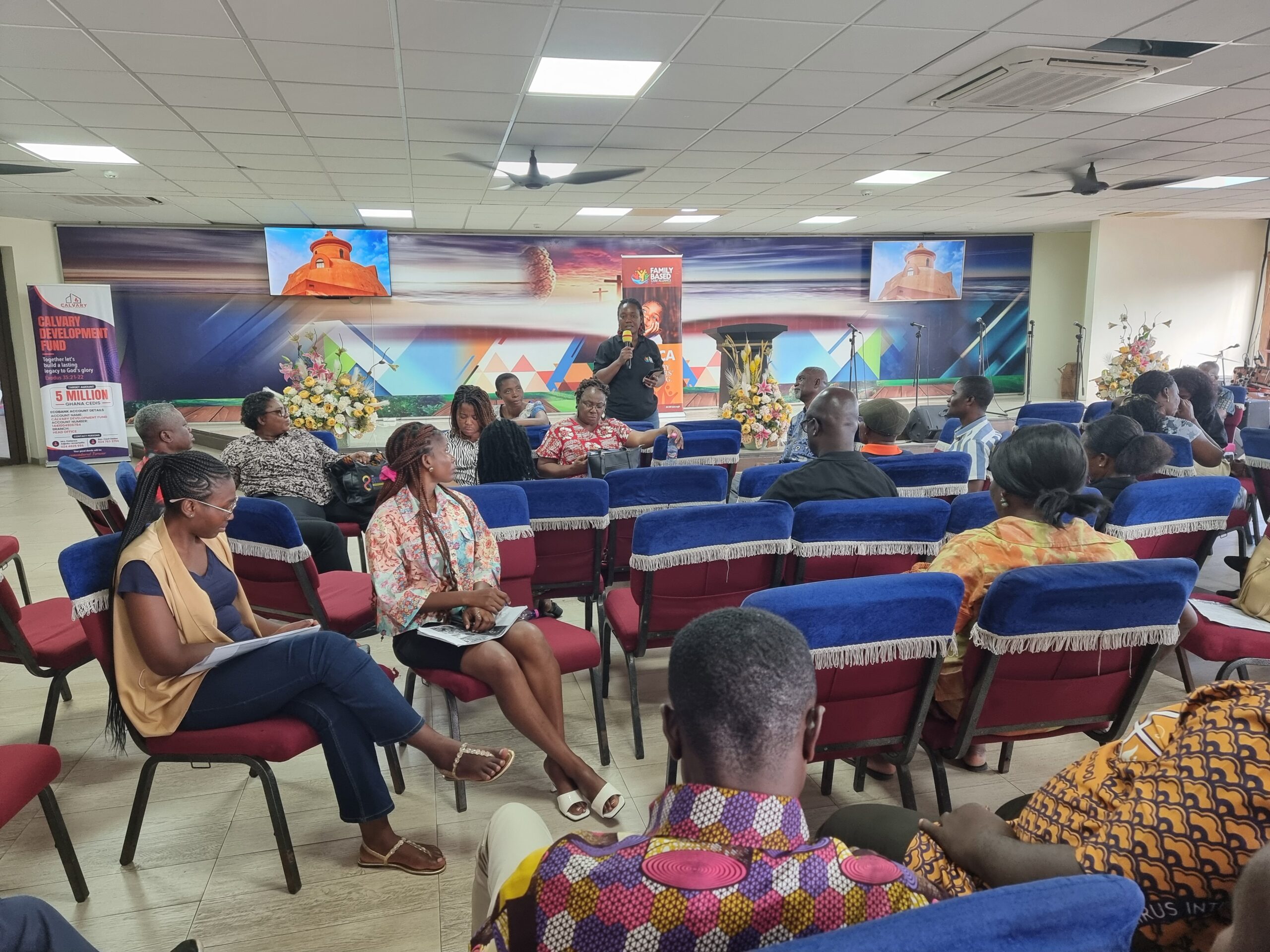
On 22nd and 23rd September, 2026, FaBCA hosted its local Collaborate+ gathering at Calvary Baptist Church, Shiashie.
The event brought together social workers, church leaders, NGO representatives, and individuals involved in caring for orphans and vulnerable children.
The programme combined local presentations, practical sessions, networking and opportunities to engage with content from the wider CAFO Collaborate gathering. The programme included CAFO content and sessions such as Innovate!, allowing participants to remain connected to the broader global event while engaging with issues relevant to their own work.
The theme for this year’s event was: LESS — Fewer Branches, Better Fruit
The theme invited participants to think differently about effectiveness.
In a field where there is always another need to respond to, another child to support, another programme to implement, and another challenge to address, it can be tempting to believe that greater impact simply requires doing more.
But what if the opposite is sometimes true?
What if greater fruit comes from becoming more focused?
Strengthening Connections with Government
An important part of the local gathering was the participation of Social Workers from the Local Government Service.
Their participation provided an opportunity for practitioners, churches, NGOs and individuals working with vulnerable children to gain a better understanding of the role of Social Workers within the local government system.
Participants were also educated on how they can access support from government through their respective District Assemblies.
This was an important practical conversation.
Many organisations and individuals working to support vulnerable children may encounter challenges that require more than the resources they have immediately available. Understanding the government structures and services that exist within their own districts can help them identify appropriate channels for seeking support and connecting children and families to available services.
The session therefore encouraged participants to see government not simply as an external stakeholder, but as an important partner in the broader effort to support children and families.
It also reinforced the value of building stronger relationships between Social Workers, District Assemblies, churches, NGOs, community organisations and individuals working with vulnerable children.
Looking Within Our Communities: Community Mapping
One of the highlights of the first day was a session on Community Mapping, which included both a presentation and a practical session.
The session introduced participants to effective ways of identifying and mobilising support within their own communities to help meet the needs of the children they care for.
For many organisations and individuals serving vulnerable children, the need for resources can feel overwhelming. Financial support, volunteers, professional expertise, materials and partnerships are all needed.
But community mapping encourages us to look beyond the resources we may already know about.
Who is already within our community?
Who has skills that could contribute?
Which businesses, churches, professionals, organisations or individuals may be willing to support vulnerable children?
What resources already exist around us that we have not yet identified or connected with?
The session provided practical approaches for answering these questions and turning community relationships and resources into meaningful support for children.
It was a reminder that sometimes the resources we need are closer than we think—we simply need to know how to find and mobilise them.
The Courage to Prune
On the second day, participants explored another important aspect of the theme through “Pruning for Greater Effectiveness in Leading Churches and Non-Profits.”
Pruning is not always easy.
As leaders and workers, we can become attached to activities, programmes, commitments and ways of working simply because we have been doing them for a long time.
Yet not everything we do produces the same value.
The session challenged participants to examine where they are investing their time, energy and resources—and to consider whether those investments are producing the desired results.
Sometimes, becoming more effective means letting go.
It means identifying activities that consume energy without producing meaningful impact. It means recognising unnecessary distractions and creating space to focus on the areas that matter most.
For leaders serving vulnerable children and families, this is particularly important.
The needs are many, but our time and resources are limited.
Pruning is therefore not simply about doing less. It is about making room for what matters more.
Connecting Globally, Serving Locally
One of the unique aspects of Collaborate+ 2026 was the opportunity to experience both sides of the gathering.
Through the livestream and CAFO content, participants in Ghana were able to connect with the global Collaborate conversation, hear from the wider event and engage with ideas and approaches being shared internationally.
At the same time, the local programme created space to address issues particularly relevant to churches, NGOs, social workers and caregivers working in Ghana.
This combination made the gathering more than a conference.
It became a space where global ideas could meet local realities.
We Are Better Together
At its heart, Collaborate+ was also about connection.
The Ghana gathering brought together people from different backgrounds but with a shared concern for the wellbeing of vulnerable children.
Social workers, church leaders, NGOs and individuals had the opportunity to learn from one another, share experiences and consider new ways of strengthening their work.
The participation of Social Workers from the Local Government Service further demonstrated the importance of connecting community-level efforts with existing government structures.
The event reinforced an important truth:
No single organisation or individual can meet every need alone.
The care and protection of vulnerable children requires collaboration—between government, churches, NGOs, social workers, communities, families and other stakeholders.
When we share knowledge, resources and experience, we create opportunities to serve children and families more effectively.
A Call to Greater Focus
Collaborate+ 2026 was more than two days of presentations, livestreams and activities. It was an invitation to reflect.
Are we doing too much?
Are there branches that need to be pruned?
Are we investing our limited resources in the areas where they can produce the greatest impact?
Are we looking closely enough at the resources already available within our communities?
And are we making full use of the support structures that already exist within our communities and government systems?
Perhaps most importantly:
Are we producing the kind of fruit that truly benefits children and families?
The answers may look different for every leader, church, NGO or organisation.
But the challenge remains the same—to become more intentional about where we invest our time, energy and resources.
Because sometimes, less really can produce more.
Fewer branches.
Greater focus.
Better fruit.
And ultimately, stronger efforts toward ensuring that vulnerable children experience the love, care and family they deserve.
No responses yet